Temporal & Context-Aware Intelligence
Researching how time, persistence, environmental context and event history can improve how visual AI interprets what is happening.

Researching how time, persistence, environmental context and event history can improve how visual AI interprets what is happening.
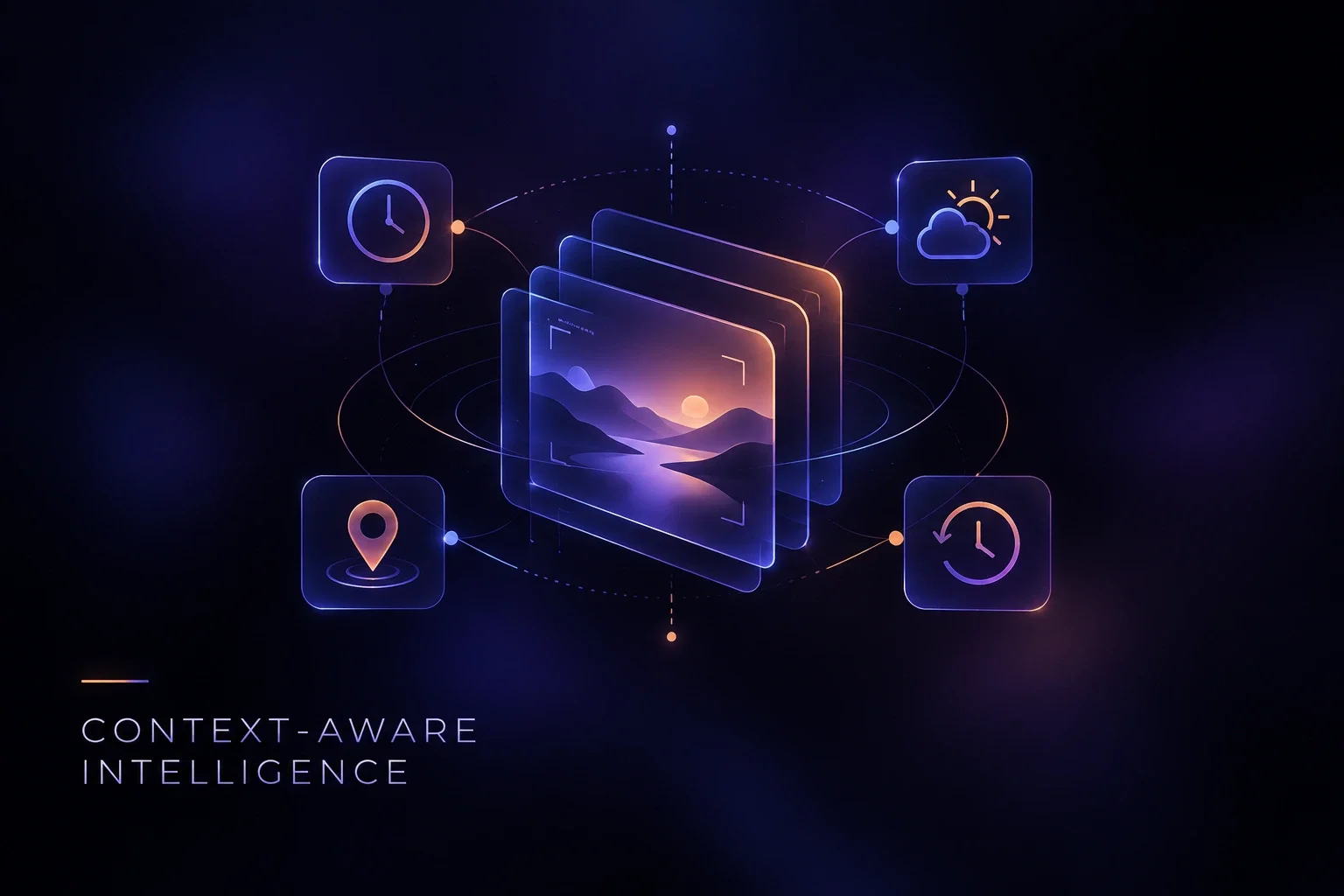
A single frame contains only a fraction of what an operational system may need to know.
The same visual pattern can have different meanings depending on:
Our research explores how these contextual signals can make visual AI more useful.
Video is a sequence, not a collection of unrelated images.
Temporal reasoning can consider:
For example, a short-lived visual anomaly may be treated differently from an event that persists and expands over several seconds.
Visual observations can also be enriched with non-visual information.
Examples include:
The purpose is not to add context for its own sake. It is to determine which external signals materially improve the interpretation of a visual event.
A conceptual context-aware event may contain:
visual_detection
+ persistence
+ camera_context
+ environmental_context
+ event_history
= richer operational event
The challenge is deciding how much influence each signal should have.
Maintaining state across frames so that a system understands whether an event is new, continuing or resolved.
Evaluating whether environmental conditions add useful information to visual event interpretation.
Allowing the same model output to be interpreted differently depending on the monitored area.
Using previous events to reduce duplication and improve event continuity.
Temporal and context-aware intelligence is a central building block for moving from isolated detection toward richer visual reasoning.